- Home
- About Us
- Products
- News
- Blog
- Contact Us
Inquiry
Form loading...
Choosing an Aluminum Alloy Extrusion supplier is not just a price comparison. The right partner must understand your part’s function, production volume, finish, and operating environment. A window frame, a heat sink, and a structural rail place very different demands on an alloy and its profile design.
Materials scientist John R. Davis, editor of Aluminum and Aluminum Alloys, has written extensively about alloy composition and properties. A practical sourcing principle consistent with that expertise is: “Match the alloy to the application, then verify how the supplier controls production.” Treat this as a guide’s working rule, not a direct quotation. Ask suppliers to explain their alloy recommendation, temper, dimensional tolerances, and quality checks in plain language.
Look beyond the sample on the table. Request inspection records, relevant certifications, and details about die design, press capacity, finishing, and lead times. A profile may look clean under bright showroom lights, yet arrive with inconsistent wall thickness or a finish that varies between batches. Ask how the supplier handles those risks—and what happens when a measurement falls outside specification.
Experience matters here. Bring a drawing, expected annual quantity, and a clear description of the part’s use. A capable supplier should flag design or production concerns before tooling begins. Still, no checklist removes every risk; buyers sometimes overlook small details, too. Compare responses carefully, confirm assumptions in writing, and judge the supplier by evidence, not confidence alone. This guide outlines the questions that help you make that assessment.
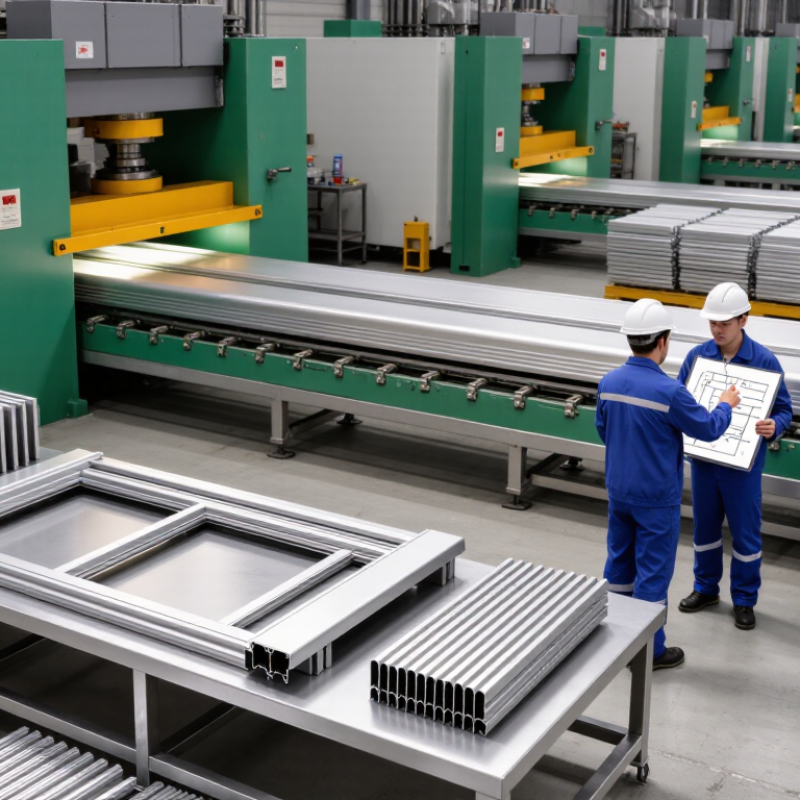
Before requesting quotes, turn the project into a clear specification. State the alloy and temper, finished profile dimensions, wall thicknesses, and required length. A simple sketch helps, but include tolerances for critical features, such as a slot that must fit a sliding insert. Avoid demanding unusually tight tolerances everywhere; they can increase cost without improving the part’s function. Small details matter.
Describe how the extrusion will be used. A frame exposed to rain may need different corrosion protection from an indoor display rail. Note expected loads, operating temperatures, surface finish, and any coating or anodizing requirements. Also explain what happens after extrusion: cutting, drilling, machining, or assembly can affect which profile features are practical. One overlooked point is packaging. Long sections may arrive scratched or bowed if handling and transport are not discussed early.
Give suppliers realistic order quantities, target delivery timing, and forecast changes, if known. Ask whether the proposed alloy, profile geometry, and tolerances suit the intended process, and request sample pieces before committing to a full run. Measure those samples against the drawing, not just by appearance. It is tempting to finalize every detail at once, but some requirements may need revision after a prototype reveals how the part fits and performs.
| Project Requirement | Example Specification | What to Confirm with the Supplier |
|---|---|---|
| End use and environment | Outdoor equipment enclosure exposed to rain and sunlight; moderate structural loading. | Ask whether the proposed alloy, temper, finish, and fabrication process suit the service environment and expected loads. |
| Alloy and temper | Consider 6063-T5 or 6063-T6 for many architectural and general-purpose profiles; consider 6061-T6 where higher strength is needed. Confirm suitability against the design requirements. | Request the exact alloy and temper, applicable material standard, and material test documentation. Mechanical properties depend on the product form, dimensions, and governing standard. |
| Profile cross-section | Provide a dimensioned 2D drawing or 3D CAD model showing the full cross-section, functional surfaces, and critical interfaces. | Have the supplier review die feasibility, metal flow, hollow-section requirements, and any features that may need design changes. |
| Profile envelope | Specify overall width, height, length, and the maximum circumscribing circle diameter (CCD) where available. | Confirm that the press and tooling can accommodate the section. Capacity depends on the extrusion press, alloy, profile shape, and production conditions. |
| Wall thickness | Show nominal wall thicknesses and identify thin walls, thick-to-thin transitions, and hollow chambers on the drawing. | Request a manufacturability review for uniformity, extrusion balance, straightness, and the achievable tolerances for the specific geometry. |
| Dimensional tolerances | Mark critical dimensions and state the required tolerance for each. Reference the applicable edition of a standard such as ASTM B221 or EN 755-9 where appropriate. | Agree on the governing standard, tolerance class, measurement method, and any tighter project-specific tolerances before tooling approval. |
| Straightness and twist | Define allowable bow, twist, and angular variation over the required cut length. | Confirm how these characteristics will be measured and whether straightening or additional processing is included. |
| Cut length and end condition | Specify finished length, length tolerance, deburring needs, and whether ends must be square, machined, or otherwise prepared. | Confirm the available cut-length range, cutting method, end-quality requirements, and any minimum or maximum production lengths. |
| Surface finish | Choose the required as-extruded finish or specify a secondary finish such as anodizing, powder coating, or painting. | Confirm finish standard, color or appearance requirements, pretreatment, masking areas, and how cosmetic acceptance will be assessed. |
| Quantity and schedule | Provide estimated prototype, initial production, and annual quantities, plus target sample and delivery dates. | Request separate estimates for tooling, samples, production, and finishing. Minimum order quantities and lead times vary by supplier and project. |
| Quality and documentation | Define inspection points, critical-to-quality dimensions, traceability needs, and required documents. | Confirm inspection equipment, sampling plan, material certificates, dimensional reports, and nonconformance handling before placing the order. |
| Packaging and shipment | Specify protection against scratches, separation between profiles, bundle size, labeling, and delivery destination. | Agree on packaging samples or requirements, identification details, shipment terms, and procedures for handling transport damage. |
Example specifications are starting points for supplier discussions. Final alloy selection, tolerances, finish requirements, and acceptance criteria should be set for the actual design and applicable standards.