INQUIRY
Inquiry
Form loading...

How to Choose the Right Aluminum Frame Profile?

Choosing the right Aluminum Frame Profile begins with understanding the project, not browsing a catalog. Frame size, load, span, joining method, environment, and appearance all influence the correct extrusion. A profile that looks strong may still twist under uneven loading. A narrow section may save material, but it can create vibration, weak joints, or difficult installation.

Dr. S. K. Das, a respected aluminum extrusion researcher, stated, “The design of an extrusion must begin with its function, not its shape.” That principle remains practical. Engineers should examine alloy grade, temper, wall thickness, moment of inertia, and tolerances before approving a section. For outdoor equipment, coating quality and corrosion resistance deserve equal attention. For cleanrooms or display systems, surface finish and dimensional consistency may matter more than maximum strength. Small details matter.

Experience also changes the decision. A frame assembled on a workbench may behave differently after transport, repeated opening, or exposure to heat. Check the fasteners. Check the corners. Check the unsupported length. These steps are easy to overlook.

There is no universally perfect Aluminum Frame Profile. That assumption needs testing. The lightest option is not always the most economical choice, especially when machining, reinforcement, and maintenance are included. A reliable selection balances performance, availability, fabrication time, and long-term service. Product data should come from traceable manufacturers, while calculations should be reviewed by qualified professionals. Even then, some uncertainty remains. Good design does not hide it; good design measures it.
How to Choose the Right Aluminum Frame Profile?

Define the Load, Span, and Performance Requirements

Choosing the right aluminum frame profile starts with the load, span, and performance requirements. Do not begin with profile shape alone. List permanent loads, moving loads, wind pressure, equipment weight, and connection forces. A small frame carrying glass may need more stiffness than a heavier frame with a short span.

The 2020 Aluminum Design Manual uses an elastic modulus of approximately 69 GPa for aluminum. This value helps engineers estimate deflection, but alloy temper and temperature still matter. Eurocode 9 also requires checks for bending, buckling, shear, and local instability. Measure the unsupported span carefully. A 2.4-meter beam behaves very differently from a 1.2-meter beam, even with the same load. Keep it practical.

Deflection often controls the profile choice before strength does. Excessive movement can cause noise, cracked panels, or poor door alignment. Project limits may be expressed as span divided by 180, 240, or 360, depending on the application. These limits are not universal. Confirm them with the applicable design standard and engineer. I have seen early selections fail because only maximum load was considered. That approach is incomplete. Recheck the assumptions. A thicker wall may improve stiffness, while a deeper profile can increase bending resistance more efficiently. Include fastener spacing, joint slip, and support conditions in the calculation. A profile that passes on paper may still perform poorly when connections are flexible.

Compare Aluminum Alloy Grades and Profile Shapes

How to Choose the Right Aluminum Frame Profile?

Choosing an aluminum frame starts with alloy grade, not appearance. The 6061 grade offers higher strength through magnesium and silicon. It suits machine bases, brackets, and load-bearing frames. The 6063 grade is easier to extrude and usually gives a cleaner surface finish. It works well for architectural frames, guards, and display structures. A higher grade is not automatically better.

6061
Higher strength for machine bases, brackets, and load-bearing frames.

6063
Easier extrusion and cleaner surface finish for architectural and display structures.

Profile shape controls stiffness.

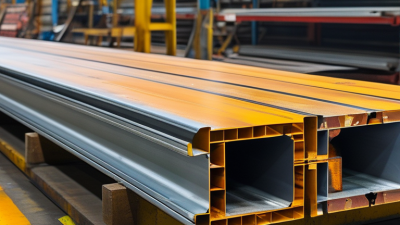
A hollow box section resists twisting, while an I-shaped section improves bending strength with less material. T-slot profiles support quick assembly and future adjustments. Channel profiles are lighter, but they may need bracing under uneven loads. ASTM B221 covers common extruded aluminum profiles, helping buyers check dimensions and mechanical requirements. The Aluminum Association also identifies 6061 and 6063 as widely used wrought alloys. Real loads matter more than catalog claims.

Tips:

Check span, force direction, joint type, and deflection limits before selecting a profile. Use section moment of inertia, not weight alone. The International Aluminium Institute reports that recycled aluminum requires about 5% of the energy used for primary aluminum production. That supports recycled content, but temper, surface quality, and supply consistency still need verification. In practice, teams often overestimate alloy strength and underestimate connection movement. That mistake deserves a simple physical test.

Select the Right Profile Size, Wall Thickness, and Connection Method

How to Choose the Right Aluminum Frame Profile?

Selecting an aluminum frame profile starts with the load, span, and working environment. A profile that looks strong may still bend across a long opening. Measure the expected load, support spacing, and acceptable deflection before choosing its size. In practical projects, larger profiles often control movement better than thicker small profiles. Yet oversizing adds weight, cost, and unnecessary handling effort.

Wall thickness affects stiffness, thread strength, and resistance to local damage. Thin walls suit light guards, display structures, and adjustable workstations. Heavier walls are safer for vibration, repeated assembly, or mounted equipment. Check the connection area carefully. A bolt can pull through a thin wall, even when the main profile remains straight. I once focused too much on the profile length and underestimated joint movement. That mistake made the frame feel unstable.

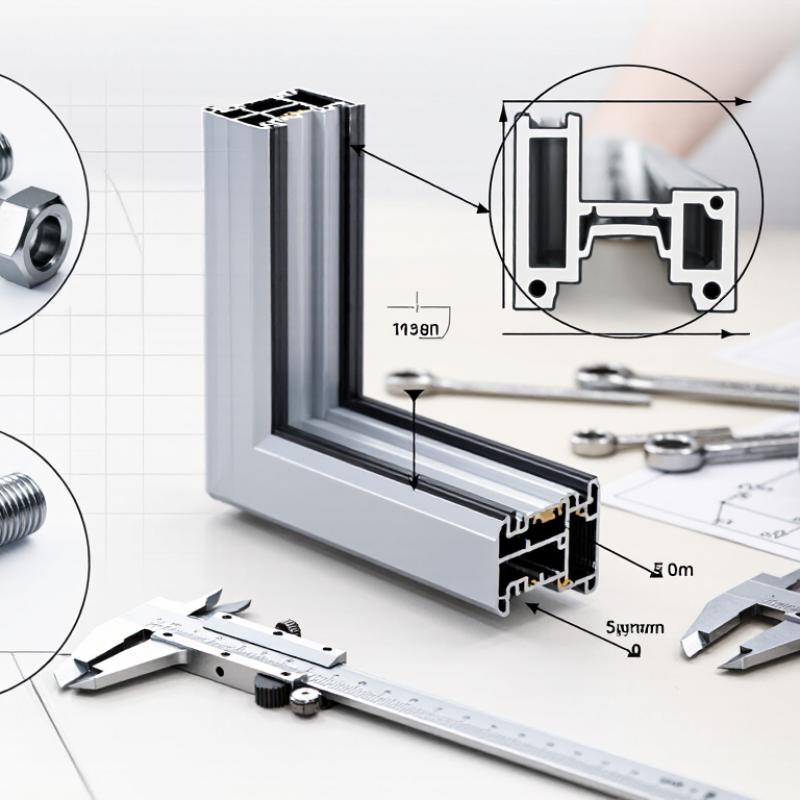
Connection method should match the load path and maintenance plan. Corner brackets allow quick adjustment and visual inspection. Internal connectors create cleaner surfaces but require accurate cutting and alignment. Threaded joints may need suitable inserts when repeated servicing is expected. Use manufacturer-independent load tables, engineering calculations, and applicable local standards to verify the design. Test a sample corner under realistic loading when the consequences of movement are serious. Small errors matter. A perfect drawing does not guarantee a rigid frame. Recheck the joints after assembly, especially where vibration, heat, or frequent adjustment is involved.

How to Choose the Right Aluminum Frame Profile? - Select the Right Profile Size, Wall Thickness, and Connection Method
Typical Application Recommended Profile Size
(Width × Height)
Typical Wall Thickness Indicative Span or Load Use Recommended Connection Method Key Selection Considerations
Light-duty guards, small enclosures, instrument frames 20 × 20 mm 1.2–1.5 mm Short spans up to approximately 500 mm; light panels and accessories Internal corner block, concealed connector, or tapping screw Compact and economical. Best where bending loads and unsupported spans are limited.
Small worktables, display frames, sensor supports 25 × 25 mm 1.5–2.0 mm Approximately 500–700 mm spans under light to moderate loads Corner bracket with T-nut and screw; internal connector for a clean exterior Offers more stiffness than 20 × 20 mm while retaining a relatively low weight.
Machine guards, access doors, medium-size equipment frames 30 × 30 mm 1.5–2.0 mm Approximately 700–900 mm spans for moderate frame loads External gusset bracket, corner bracket, or internal connector A practical general-purpose size for modular structures and machine guarding.
Workbenches, material racks, conveyor supports 40 × 40 mm 1.8–2.5 mm Approximately 900–1,200 mm spans under moderate loads Heavy-duty gusset bracket, bolted angle plate, or internal connector Use when improved stiffness and stronger threaded joints are required.
Medium machine bases, larger benches, protective structures 45 × 45 mm 2.0–3.0 mm Approximately 1,000–1,400 mm spans, depending on loading Reinforced corner bracket, gusset plate, or multiple internal connectors Suitable for frames subject to vibration, repeated access, or higher joint forces.
Heavy workstations, equipment supports, large safety enclosures 50 × 50 mm 2.0–3.0 mm Approximately 1,200–1,600 mm spans under moderate to high loads Heavy-duty gusset plate, bolted plate joint, or reinforced internal connector Provides greater bending stiffness. Check deflection, not only strength, for long beams.
Long beams, portal frames, high-load machine structures 60 × 60 mm or larger 2.5–4.0 mm Longer spans or concentrated loads; final size requires engineering calculation Bolted splice plate, structural gusset, or engineered plate connection Use a structural calculation for buckling, deflection, vibration, and joint capacity.
Panel mounting, shelves, and non-structural infill members 20 × 40 mm or 30 × 60 mm 1.5–2.5 mm Useful for shallow beams and panel edges where bending occurs mainly in one direction T-slot nuts and bolts, corner brackets, or panel-holding connectors Orient the deeper dimension in the direction of bending to increase stiffness efficiently.
Frames exposed to frequent assembly and adjustment 30 × 30 mm to 45 × 45 mm 1.5–2.5 mm Modular loads within the profile manufacturer's stated working limits T-slot connection using sliding nuts and machine screws Best for adjustable designs because components can be repositioned without drilling.
Permanent, clean-looking frames with concealed hardware 30 × 30 mm to 50 × 50 mm 1.8–3.0 mm Light to heavy modular frames, subject to joint and span verification Internal corner connector, dowel connector, or concealed anchor fastener Provides a smooth exterior appearance, but installation access and pull-out strength must be checked.
High-strength permanent joints 40 × 40 mm or larger 2.0–4.0 mm Structures carrying higher shear, tension, or repeated dynamic loads Through-bolted plate, gusset plate, or properly designed riveted joint Use larger bearing areas and locking hardware where vibration or cyclic loading is present.
Lightweight corrosion-resistant indoor and outdoor frames Any size selected by load and span Typically 1.5–3.0 mm Depends on alloy, temper, exposure, support conditions, and surface finish Stainless-steel fasteners with suitable isolating washers or standard aluminum-frame hardware Common extrusion alloys such as 6063-T5 provide good finish quality and corrosion resistance; prevent galvanic contact with incompatible metals.
Engineering note: The dimensions and wall thicknesses above are preliminary selection guidelines, not certified load ratings. Final sizing must consider alloy and temper, cross-section geometry, unsupported span, load type and position, allowable deflection, buckling, vibration, fastener strength, joint stiffness, safety factors, and the applicable local design standards. For safety-critical structures, verify the complete frame through engineering calculations or testing.

Evaluate Surface Finishes, Tolerances, and Environmental Resistance

How to Choose the Right Aluminum Frame Profile?

Surface finish is more than a visual choice. Anodizing creates a harder oxide layer, while powder coating offers broader color control. For coastal projects, request coating thickness, pretreatment details, and corrosion-test evidence. A glossy sample may look excellent indoors but reveal staining after months of salt exposure. ISO 9223 classifies atmospheric corrosion by environmental severity, so match the finish to humidity, salt, and pollutants. Salt-spray hours alone can mislead.

Tolerances deserve equal attention. Check EN 755-9 or ASTM B221 requirements before approving a profile. A drawing should define wall thickness, straightness, twist, and cut length. On site, a 0.5-millimeter mismatch can affect brackets, seals, and sliding movement. Measure trial pieces with calibrated calipers, not visual judgment. This is where many projects become expensive.

Environmental resistance also includes thermal movement and cleaning chemicals. Aluminum expands about 23 micrometers per meter per degree Celsius. Long frames need suitable joints and allowance for movement. The International Aluminium Institute reports that recycled aluminum requires about 5% of the energy used for primary production. That figure supports recycled content, but it does not excuse weak surface protection. I once treated appearance as quality. It was not. Ask for traceable test results, realistic exposure data, and tolerances that fit the installation method.

Check Compatibility, Fabrication Needs, Cost, and Supplier Standards

How to Choose the Right Aluminum Frame Profile?

Start with compatibility, not appearance. Confirm the profile’s alloy, temper, dimensions, and load capacity. Match it with panels, fasteners, seals, hinges, and glazing systems. Check tolerances carefully. A profile can fit on paper yet fail during assembly. EN 755 and EN 12020 provide useful guidance for aluminum extrusion dimensions and tolerances. Request the supplier’s test reports, dimensional records, and alloy certificates before approving samples.

Fabrication needs should shape the selection. Review cutting length, drilling locations, corner joints, surface treatment, and welding limits. A complex channel may look efficient but increase machining time and scrap. The U.S. Department of Energy reports that recycled aluminum requires about 95% less energy than primary aluminum production. Ask whether recycled content can meet the required strength and finish. It may reduce environmental impact, but it does not automatically reduce project cost.

Cost includes more than the purchase price. Compare machining hours, packaging, transport, installation effort, and replacement risk. Request a quotation with tolerances, minimum order quantities, tooling charges, and lead times clearly separated. Supplier standards matter. ISO 9001 certification can support process consistency, while independent inspection improves confidence. Still, certificates are not enough. Examine sample corners and measure a real cut piece. No checklist is perfect. A rushed comparison can miss small defects that become expensive later.