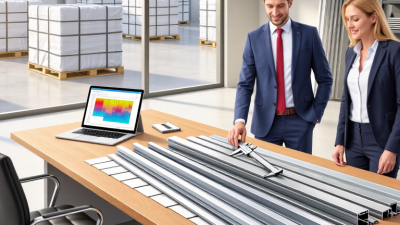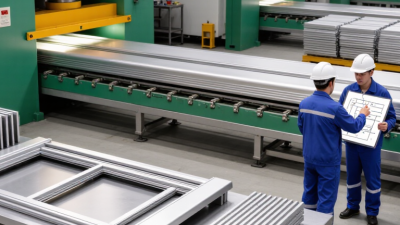
Choosing a global Aluminum Industrial Profile manufacturer requires more than comparing catalogues. Buyers must assess alloy consistency, dimensional tolerances, surface finish, machining capacity, and delivery reliability. These details show up on the shop floor: a poorly controlled profile can complicate assembly, increase scrap, or delay installation. Small differences matter.
The International Aluminium Institute reported global primary aluminium production of about 70.6 million tonnes in 2023. The International Energy Agency identifies aluminium production as an energy-intensive industry and highlights efficiency and recycling as important routes to lower emissions. These figures explain why manufacturers’ energy sources, recycled content, and process controls deserve attention alongside price. Still, company claims do not always use comparable measurement methods. Buyers should verify specifications and supporting documentation.
Miles Prosser, Secretary General of the International Aluminium Institute, has emphasized aluminium’s importance to the low-carbon transition. A careful paraphrase of that industry message is: growth in aluminium demand must be matched by cleaner production and stronger recycling. This is relevant to profile sourcing, but it is not a substitute for factory-level evidence. The manufacturers compared in this guide are assessed through practical criteria, including product range, quality systems, technical support, and regional reach. No ranking can fit every application. A profile suited to a curtain wall may not suit a heat sink or automated production line. The best choice depends on the drawing, operating conditions, and supplier’s ability to deliver consistently.
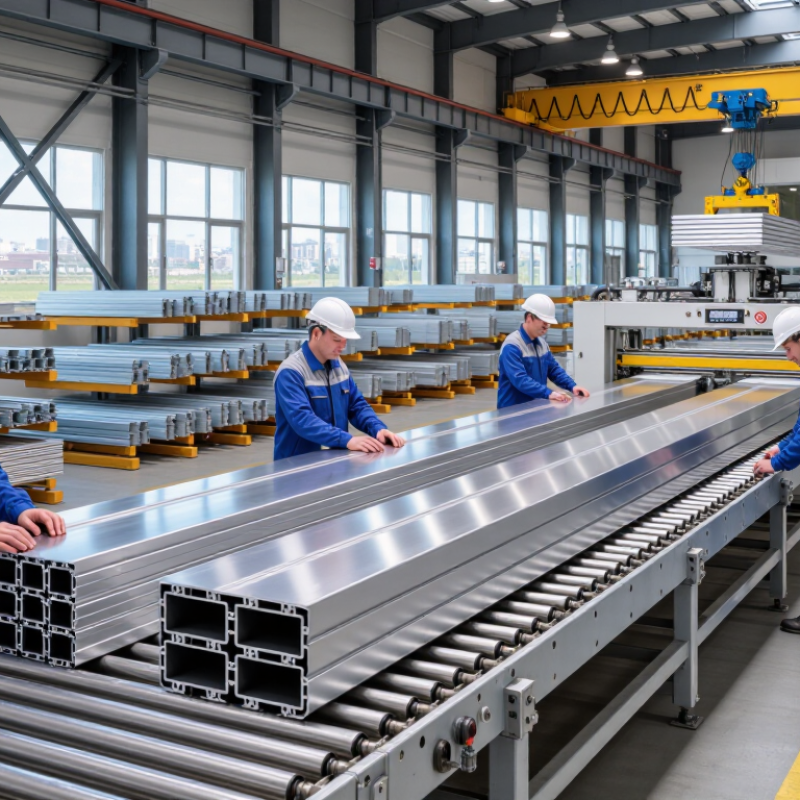
What Are Aluminum Industrial Profiles and How Are They Made?
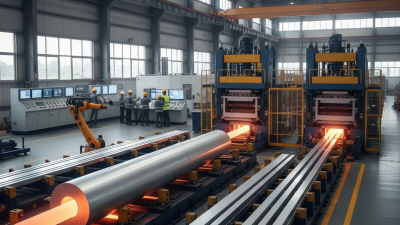
Aluminum industrial profiles are shaped sections used in machinery frames, conveyor systems, enclosures, and structural supports. Most are made through extrusion. A billet is heated to roughly 400–500°C, then pushed through a hardened steel die. Pressure forces the softened aluminum into a continuous shape. The profile is cooled, stretched, cut, and often artificially aged for greater strength.
The design begins with the die, not the cutting table. Engineers calculate wall thickness, corner radii, tolerances, and load direction before production. The International Aluminium Institute reports that global primary aluminum production exceeded 70 million tonnes in 2023. This scale supports wide profile availability, but it also raises energy concerns. The Institute notes that recycled aluminum can require only about 5% of the energy used for primary metal. That figure is powerful, although real savings depend on collection, sorting, and remelting conditions. The process is efficient, but never perfectly waste-free.
Tips: Ask for alloy, temper, dimensional tolerance, and surface-finish data before comparing suppliers. A profile may look identical while performing differently under vibration. Check whether the manufacturer controls die design, extrusion speed, cooling, and aging internally. The U.S. Geological Survey’s Mineral Commodity Summaries 2024 identifies aluminum as a major global industrial material, yet broad production statistics cannot confirm one profile’s quality. Request test reports, sample sections, and traceability records. Small details matter.
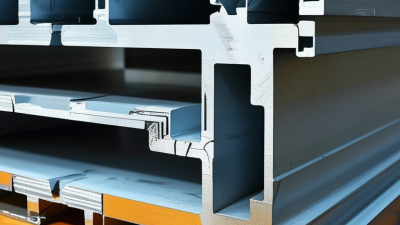
Assessing aluminum profile manufacturers requires more than comparing catalog photos. Review their extrusion capacity, alloy options, dimensional tolerances, and surface treatments. Ask for recent inspection reports, material certificates, and sample profiles with measured wall thickness. A reliable supplier should explain its testing process clearly, not hide behind vague quality claims. Check whether production records support traceability from billet to finished profile.
Visit the facility when possible, or request a live video inspection. Observe die storage, extrusion presses, cooling areas, cutting equipment, and packaging methods. Small details matter, such as protective film, corner guards, and moisture control during shipping. Confirm realistic lead times, minimum order quantities, tooling charges, and communication procedures. A polished website proves little. Even experienced buyers can overvalue attractive pricing and overlook inconsistent tolerances. I would compare several samples before approving a large order.
Tips: Create a simple scoring sheet. Rate quality evidence, engineering support, capacity, delivery history, and after-sales response. Request references from comparable industries. Check whether certificates are current and independently verifiable. If a manufacturer refuses a basic factory audit, pause the evaluation. Perfect performance is rarely guaranteed, so document assumptions and test critical profiles before full production.
Regional strength in aluminum profiles follows metal supply, extrusion capacity, and nearby construction or transport demand. The International Aluminium Institute reported about 70.6 million tonnes of global primary aluminum production in 2023; China produced roughly 41.5 million tonnes. This scale supports a dense network of Asian extruders, especially in China, India, and Southeast Asia. Yet metal output is only a proxy for profile leadership. Die design, heat treatment, surface finishing, and quality control matter just as much. Small details matter.
In Europe, manufacturers commonly serve automotive, machinery, and building projects that require tight tolerances and documented material performance. The European Aluminium association’s market reports track these sectors, while the International Energy Agency highlights aluminum’s importance in vehicle lightweighting. North American producers benefit from demand in construction, solar mounting, and transportation, with regional capacity shaped by energy costs and recycled-metal availability. The US Geological Survey’s Mineral Commodity Summaries provide useful country-level production context, but they do not rank profile makers. That gap is real. A regional comparison should therefore assess extrusion capability, alloy range, lead times, and certifications—not simply the volume of aluminum produced. Industry reports rarely compare manufacturers on identical terms, so any “top” list deserves careful checking.
Aluminum industrial profile manufacturers typically supply extruded bars, channels, tubes, and custom sections.
Common alloys balance strength, corrosion resistance, and machinability. Buyers can specify wall thickness, temper, finish, and cut length. Small details matter: a poorly matched slot can slow assembly, even when the profile looks right.
The U.S. Geological Survey estimated global primary aluminum production at about 70 million metric tons in 2023, in its Mineral Commodity Summaries 2024. That scale supports broad supply networks, but it does not guarantee every profile is available quickly.
Building and construction users need window frames, curtain-wall sections, and heat-transfer components. Automotive and rail manufacturers use lightweight structural profiles and interior trim. Electronics producers rely on compact enclosures and heat sinks. Solar installations also use mounting rails and frames.
Major manufacturers may offer standard catalogs alongside custom die designs, machining, surface treatment, and technical support.
Anodizing can improve surface durability; powder coating adds color and another protective layer. Yet specifications deserve a second look. A lighter section may reduce material use, but can flex too much under load.
Industry data describe markets, not individual performance. Ask for alloy certificates, dimensional tolerances, and test results tied to the intended application.
A reliable aluminum profile manufacturer should show how quality is controlled, not simply describe it. Ask for inspection records covering alloy composition, dimensions, surface finish, and tensile performance. Compare samples against the drawings your project will use. A profile that looks smooth under showroom lights may reveal scratches or uneven coating in daylight. Small details matter. Check whether the supplier explains how defects are traced and corrected. Ask for proof.
Capacity is more than a large press or a high monthly output figure. Review available extrusion sizes, die-making support, finishing options, and realistic lead times. Ask how production changes during peak periods, and whether trial runs can confirm fit before a full order. Sustainability claims need comparable evidence, such as recycled-content data, energy-use information, and documented waste practices. Methods may differ, so compare the scope and date of each record. A manufacturer may provide strong data in one area and leave another unclear. That gap is worth discussing, not hiding. A careful comparison takes time, and no checklist replaces a conversation about your actual specifications.
| Comparison dimension | What to compare | Evidence to request | How to interpret it |
|---|---|---|---|
| Quality management | Quality system scope and controls for extrusion, finishing, inspection, and corrective action. | Current ISO 9001 certificate, including its scope and issuing certification body; audit and corrective-action records where available. | ISO 9001 certifies a quality-management system, not that every profile automatically meets a particular product specification. |
| Dimensional and mechanical performance | Tolerances, alloy and temper, mechanical properties, and inspection methods for the specified profile. | A written product specification, inspection plan, sample measurement report, and material test certificate; identify the applicable standard and edition. | EN 755 covers aluminium and aluminium alloys—extruded rod/bar, tube, and profiles. EN 12020-2 specifies tolerances for certain precision extruded profiles. Confirm applicability to the product and order. |
| Process capability | Ability to make the required cross-section, wall thickness, length, straightness, surface finish, and secondary operations. | Tooling review, trial-extrusion results, capability data for critical dimensions, and confirmation of finishing and machining processes. | Capability is profile- and process-specific. Compare results against the same drawing, tolerance, alloy, temper, and inspection method. |
| Production capacity | Available capacity for the required alloy, profile size, press, finish, and delivery schedule—not headline capacity alone. | Relevant press and finishing capability, confirmed monthly allocation, lead-time assumptions, minimum order quantity, and contingency plan. | There is no single capacity figure that makes manufacturers directly comparable; clarify whether reported tonnage is installed, available, or actual output. |
| Delivery reliability | On-time delivery performance, order tracking, packaging, and response to schedule changes. | A defined on-time-in-full calculation, performance history for comparable orders, and agreed escalation procedures. | Compare the measurement period, delivery-point definition, and treatment of partial shipments before comparing percentages. |
| Environmental management | Environmental controls, targets, energy use, emissions, and waste management at the relevant production site. | Current ISO 14001 certificate and scope; site-level environmental objectives and performance data, with boundaries and reporting period. | ISO 14001 addresses an environmental-management system; certification alone does not establish a product’s carbon footprint. |
| Carbon footprint transparency | Product-level greenhouse-gas results and the boundaries, assumptions, and data quality behind them. | A product-specific environmental product declaration (EPD), where available, and its program operator, validity, product scope, and life-cycle stages. | Only compare declared results when product category rules, declared unit, system boundaries, and life-cycle stages are aligned. |
| Recycled aluminium and traceability | Recycled content, its calculation method, source traceability, and chain-of-custody controls. | A documented recycled-content claim with defined boundaries and supporting records; relevant chain-of-custody certification where applicable. | Ask whether the claim is pre-consumer, post-consumer, or combined, and whether it is allocated to the specific product or reported across a site or company. |
| Responsible sourcing | Supply-chain due diligence and assurance covering relevant environmental and social practices. | Applicable third-party certification or audit, its site and material scope, and documented supplier due-diligence procedures. | Check that any certification covers the facility, material, and chain-of-custody model relevant to the order. |
| Technical and customer support | Design-for-extrusion advice, tooling ownership, sample approval, change control, and defect resolution. | Named technical contacts, drawing-approval workflow, nonconformance response process, and written tooling and change-control terms. | Assess against the project’s engineering complexity and required response times; confirm responsibilities in the contract. |
Comparison note: Manufacturer-specific performance figures are not included because they require current, comparable, independently verifiable data. Request evidence for the exact production site and product scope, and compare offers against the same specification.